Chosen Care: The Philosophy of Unscalable Attention
The deli owner, the market vendor, and the problem with being known.
Abstract#
A deli owner in New York and a market vendor in Hanoi both do something that looks like personalization: they remember your name, anticipate your order, ask about your life. A recommendation algorithm does the same thing, and does it better. I argue that the algorithm's superiority is exactly the problem. What the human offers isn't personalization. It's recognition, a mutual exchange between agents who choose to attend to each other at cost. Recognition is a public good that markets can't price and platforms can't replicate, and its disappearance has consequences for democratic life that political theory hasn't named.
Keywords: recognition theory, attention economy, platform capitalism, democratic theory, chosen care, public goods, market failure
I.#
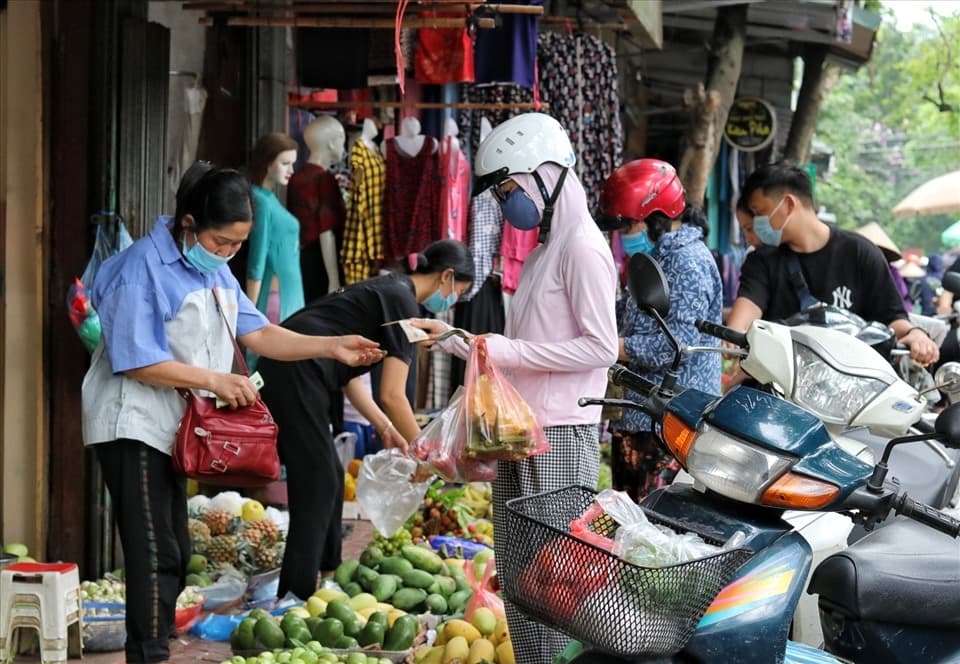
In a chợ, a traditional Vietnamese open-air market, on the edge of Hanoi's Cầu Giấy district, a vegetable vendor has been selling to the same families for decades. She doesn't keep records. But when a regular's daughter shows up on a Saturday, the vendor already knows what she needs, because the mother mentioned last week that she's making bún riêu for a family gathering. The right crab paste and tomatoes are already set aside. The two talk for a few minutes. The vendor asks about the daughter's exam. The daughter asks if the vendor's back is feeling better. Then the transaction happens, almost as an afterthought.
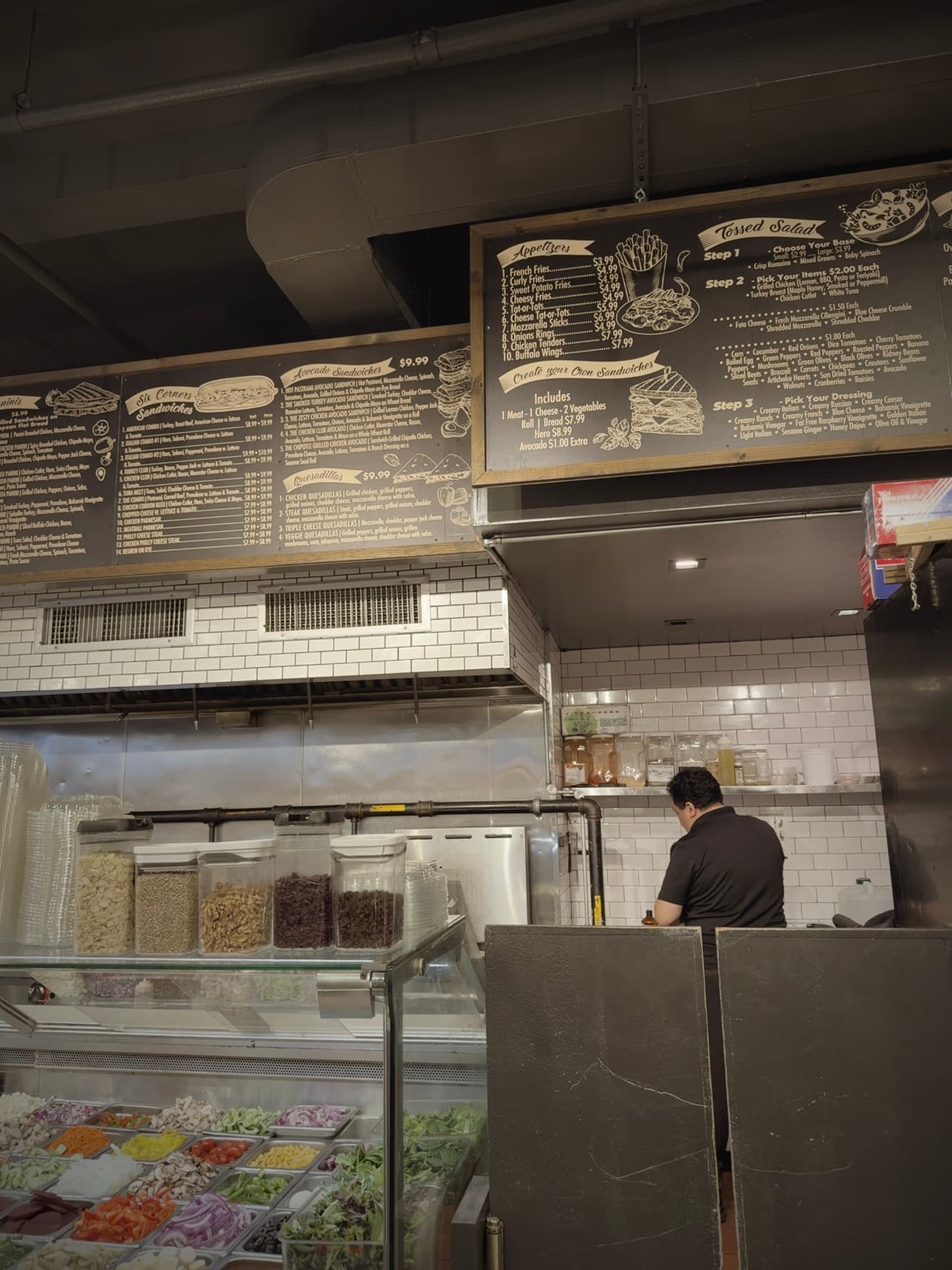
Eight thousand miles west, in a deli on the corner of 106th Street and Broadway in New York, something that looks identical happens every morning. A regular walks in. The owner reaches for the right sandwich before the order comes. He asks about the customer's week. He remembers something from last time, a job interview, a sick relative, and brings it up. The customer knows the owner's name, asks about his family, stays a beat longer than the transaction requires.
Spotify also knows what you want before you ask. It builds you a "Discover Weekly" playlist calibrated to patterns in your listening history. It remembers what you liked. It anticipates what you'll like next. And it does this better, more consistently, and at greater scale than the deli owner or the chợ vendor ever could.
So here is the question: if the algorithm is better at personalization than the human, what exactly is the human doing that the algorithm isn't? And does the answer matter politically?
I think it does. I think the chợ vendor and the deli owner are doing something that looks like personalization but is actually a different thing entirely, something I want to call chosen care. And I think the difference between chosen care and its algorithmic imitation isn't a matter of technological maturity. It's a structural difference with consequences for democratic life that political theory hasn't adequately named.
II. What the Vendor and the Owner Are Actually Doing#
Start with what's happening in the chợ. The vendor remembers the daughter's exam. Why? Not because remembering exams is good for business, though it might be. She remembers because she and this family are embedded in a web of tình cảm. The standard English translation is "emotional bonds" or "sentiment," but the translation strips out most of what the concept does.1.For a discussion of tình cảm in Vietnamese social life, see Helle Rydstrom, Embodying Morality: Growing Up in Rural Northern Vietnam (Honolulu: University of Hawai'i Press, 2003), 67-92.1 Tình cảm is not a feeling you have toward someone. Gammeltoft calls it "an identity-defining ethical orientation," the promptings of a feeling heart rather than rules or rational calculation.2.Tine Gammeltoft, "Calibrating Care: Family Caregiving and the Social Weight of Sympathy (Tình Cảm) in Vietnam," American Anthropologist 126, no. 2 (2024).2 It's a relationship you build through accumulated acts of attention, and it carries obligations that aren't contractual but aren't optional either. Not quite duty, not quite affection, not quite loyalty, but a texture made of all three.
That texture matters for what I'm arguing, and not just ethnographically. Cassin's Dictionary of Untranslatables defines an untranslatable not as what cannot be translated but as "the sign of the way in which, from one language to another, neither the words nor the conceptual networks can simply be superimposed."3.Barbara Cassin, ed., Dictionary of Untranslatables: A Philosophical Lexicon, trans. Emily Apter, Jacques Lezra, and Michael Wood (Princeton: Princeton University Press, 2014), xvii.3 The problem with tình cảm isn't that English lacks a word for it. The problem is structural: English-language political theory has no conceptual architecture for the kind of attention the chợ produces. Care ethics calls it care but theorizes care as structurally mandated by gender or economics.4.Joan Tronto, Moral Boundaries: A Political Argument for an Ethic of Care (New York: Routledge, 1993), 103-108; Virginia Held, The Ethics of Care: Personal, Political, and Global (Oxford: Oxford University Press, 2006), 29-45.4 Economics calls it a transaction cost. Recognition theory comes closest, but even Honneth's three forms of recognition, love, rights, and solidarity, treat as separate categories what tình cảm holds together in a single concept.5.Axel Honneth, The Struggle for Recognition: The Moral Grammar of Social Conflicts, trans. Joel Anderson (Cambridge: MIT Press, 1995), 92-131.5 Honneth's three forms map onto Euro-American institutional structures. Tình cảm operates across all three simultaneously: it is affective like love, carries quasi-obligatory force like rights, and expresses communal belonging like solidarity. That integration is the point. Apply Honneth's framework to the chợ and you'd classify the vendor's care as "solidarity," the third form: esteem within a community of value. But that misses the costliness and voluntariness that make it legible as recognition rather than communal obligation. Apply Tronto's care ethics and you'd call it care labor, which captures the effort but misses the mutuality. Neither framework can explain why the same kind of attention produces democratic effects (community trust, civic capacity) when it is chosen but not when it is mandated. That gap is what chosen care names. And because the concept doesn't exist in the theory, the theory can't see what's being lost when the chợ closes.
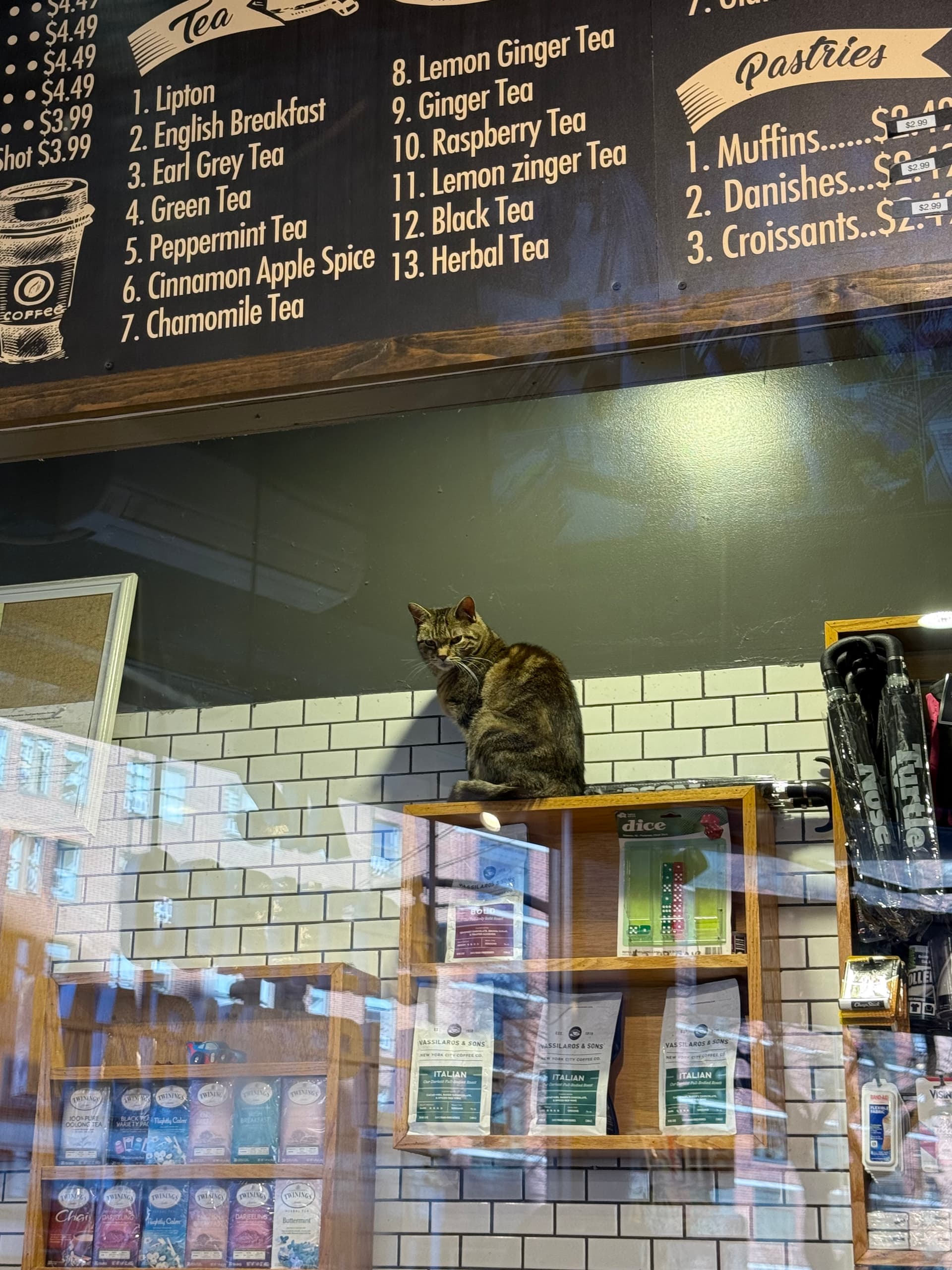
The deli owner on 106th Street doesn't have a word for what he's doing either. American English calls it "being a regular" or "knowing your customers," but those phrases flatten it. What's actually happening is that two people are appearing to each other, repeatedly, voluntarily, and at cost. The owner spends cognitive effort remembering names and stories. The customer spends time lingering, asking questions, coming back. Neither is optimizing for anything. Neither has to be there. And both know that the other doesn't have to be there, which is what makes the exchange mean something.
Arendt called this dynamic the "space of appearance": the condition that arises when people reveal themselves to each other through word and action, and in doing so, bring something political into existence.6.Hannah Arendt, The Human Condition, 2nd ed. (Chicago: University of Chicago Press, 1998), 198-199.6 She was talking about the Greek polis, not a bodega. And the deli is an economically asymmetric space: the owner sells, the customer buys. But Arendt's concept doesn't require formal equality or a designated political arena. It requires mutual disclosure between agents who could choose otherwise. The owner and the customer are asymmetric in their economic roles. They are symmetric in the thing that matters here: both choose to appear to each other, and both could stop. What makes the exchange political is not the transaction but the voluntary excess beyond it: the extra moment, the question about the sick relative, the choice to remember. That excess is where the political residue lives, regardless of setting.
This is what I mean by chosen care.
The vendor's attention is voluntary. She extends it without compulsion, contract, or systematic incentive. Nobody told her to ask about the exam. She chose to. And that choice is what makes it legible as recognition. We don't feel seen when someone is paid to notice us.
It's costly. It requires memory, attention, empathy, all resources that are finite and could go elsewhere. Simone Weil called attention "the rarest and purest form of generosity" because it's scarce.7.Simone Weil, letter to Joë Bousquet, April 13, 1942, in Correspondance (Lausanne: Editions l'Age d'Homme, 1982), 18.7 The algorithm's attention costs nothing. Generating one more personalized recommendation has a marginal cost approaching zero. But the vendor's attention costs her something every time, which is what signals that the daughter has been selected for attention from among everything else the vendor could be thinking about. Attention that costs nothing signals nothing.
It's non-optimizing. The vendor isn't A/B testing her warmth. There's no engagement metric for asking about the exam. She probably does benefit economically from loyalty, but the care isn't structured by that benefit.8.Max Horkheimer, Eclipse of Reason (New York: Oxford University Press, 1947), 3-57.8 The vendor's care has reasons. It doesn't have a conversion rate.
And it's mutual. The daughter also remembers the vendor's back pain. The customer also remembers the deli owner's name. Both sides are giving and receiving attention simultaneously. In charity, one party gives and the other receives. In the chợ and in the deli, recognition runs in both directions. Both parties appear to each other as agents capable of choosing to attend or not, and both exercise that capacity.
III. Why the Algorithm's Superiority Is the Problem#
The standard critique of algorithmic personalization is that it's worse than the human version: creepy, invasive, shallow. Zuboff focuses on the extraction of behavioral surplus, the ways platforms take more than they give.9.Shoshana Zuboff, The Age of Surveillance Capitalism: The Fight for a Human Future at the New Frontier of Power (New York: PublicAffairs, 2019), 63-97.9 Jacobsen argues that platforms have become "increasingly powerful arbiters of recognisability, determining the conditions of possibility of how people are seen and come to matter."10.Benjamin N. Jacobsen, "Regimes of Recognition on Algorithmic Media," New Media & Society 25, no. 12 (2023): 3641-3656.10 Both critiques are right about what they describe. But both assume that the problem with algorithmic attention is that it's deficient, that it fails to do what human attention does, and that the task is to name and measure that failure.
I want to make the opposite claim. The algorithm is better at personalization than the deli owner. It's more reliable. It never forgets your name. It never has a bad day. It processes orders of magnitude more preference data than a human brain can hold. And this superiority is exactly what exposes the category error at the heart of attention economy discourse. We've been using the same word, "personalization," for two different things, and the algorithm's perfection at one of them reveals that the other was never about accuracy at all.
What the deli owner does isn't personalization. It's recognition. And recognition is different from personalization in a way that matters for political theory.
Personalization is unilateral. The platform "knows" the user. The user can't know the platform back. There is no reciprocal appearance. The user shows up to the algorithm as a vector of behavioral data. The algorithm doesn't show up to the user as anything. There is no face behind the recommendation, no agent who chose to attend, no cost paid, no mutuality.
Recognition is bilateral. Both parties appear. Both pay a cost. Both could walk away. And both know the other could walk away. That knowledge, that the person attending to you is doing so freely and at some expense, is the thing that produces the felt experience of being a recognized agent. Without it, you feel optimized for. You don't feel seen.
The experimental evidence bears this out. Banker and Khetani found across five studies that consumers develop "algorithm overdependence," surrendering to algorithmic recommendations even when those recommendations are inferior, because they assume algorithmic outputs are inherently reliable.11.Sachin Banker and Salil Khetani, "Algorithm Overdependence: How the Use of Algorithmic Recommendation Systems Can Increase Risks to Consumer Well-Being," Journal of Public Policy & Marketing 38, no. 4 (2019): 500-515.11 Adomavicius and colleagues showed that recommendation systems actively anchor and reshape user preferences rather than merely respond to them.12.Gediminas Adomavicius et al., "Do Recommender Systems Manipulate Consumer Preferences? A Study of Anchoring Effects," Information Systems Research 24, no. 4 (2013): 956-975.12 The simulation works. People learn to feel "known" by their feeds. But the bonds formed are with a system that has no perspective to inhabit, no stake in the relationship, and no capacity to withdraw. Bonds without mutuality.
And mutuality is where the political stakes live. Rosa's resonance theory names something close: a non-instrumental, bidirectional encounter in which both parties are transformed.13.Hartmut Rosa, Resonance: A Sociology of Our Relationship to the World, trans. James C. Wagner (Cambridge: Polity, 2019).13 But Rosa treats resonance as existential, not political-economic, and doesn't ask what happens when markets systematically destroy the conditions for it. Honneth gets closer. His recognition theory argues that self-confidence, self-respect, and self-esteem, the psychological preconditions of democratic agency, develop through being recognized by others who are themselves agents.14.Honneth, Struggle for Recognition, 92-131.14 Not through being predicted by systems that process you as data.
So the problem isn't that algorithmic solicitude is bad at mimicking care. The problem is that it's good at it. Good enough that the institutions where chosen care happens lose their economic rationale. Why pay more for attention that sometimes forgets your name when you can get attention that never does? The answer, which the market can't price, is that the attention that sometimes forgets your name is the only kind that constitutes you as a recognized agent. And being constituted as a recognized agent is a precondition for democratic participation, not a consumer preference.
The distinction between recognition and personalization holds against recommendation engines. It faces a harder test against conversational AI: the AI companion, the AI therapist, the AI girlfriend. These are not hypothetical. Millions of people already maintain daily relationships with AI systems that remember their name, adapt to their tone, ask how their week went, and respond with what feels like genuine understanding. The phenomenon is widespread enough that even the architects of these systems have taken notice: Anthropic's CEO has described "AI psychosis" and "AI girlfriends" as evidence that current models exert powerful effects on people's lives.15.Dario Amodei, "The Adolescence of Technology," darioamodei.com, 2026.15 The felt experience of being attended to by a sophisticated AI can be indistinguishable from the felt experience of being attended to by a person. If recognition were only a feeling produced in the recipient, the argument would be over.
Recognition, as I've defined it, is a relation. And the relation has structural requirements that no AI system currently meets.
The first is scarcity of selection. The deli owner's attention to you means inattention to something else, and that tradeoff is the signal. An AI attends to millions simultaneously at near-zero marginal cost. There is no selection, and therefore no signal that you, in particular, have been chosen.
The second is shared stakes. The deli owner lives in your neighborhood. He can be held accountable, embarrassed, avoided. He participates in the same social world you do, and his reputation is at risk every time he interacts with you. The AI coinhabits no social world with you and has no reputation to stake.
The third is autonomous perspective. An AI system can refuse a request, but its refusal comes from programmatic constraints rather than from its own judgment about you. The deli owner pushes back because he has his own perspective, his own moods, his own assessment of you as a person. That autonomy is what makes his attention legible as the act of another agent rather than the output of a system.
None of this requires settling the question of machine consciousness. Even if a future system developed something we were willing to call experience, the democratic function of recognition would still depend on whether it shared a political world with the people it attended to: whether it could bear a reputation, suffer consequences, or be a neighbor.
The deeper problem is that AI companionship succeeds at something close enough to recognition that people stop seeking the version that has democratic value. The friction of human recognition, the risk that the other person might judge you, disagree with you, or refuse you, is precisely the mechanism. It is what forces you to develop the capacity to appear before others as you actually are, rather than as a version of yourself optimized for a system whose constraints come from its designers instead of from its own experience of you. A society that increasingly prefers AI attention because it is safer is a society whose capacity for democratic life is quietly atrophying, because people are being offered something that feels like recognition without the cost that makes recognition generative.
IV. The Evidence That It's Happening#
The institutions that produce chosen care are disappearing on both sides of the Pacific, under different political systems, for structurally related reasons. But the reasons need precision, and the evidence needs honesty about what it can and can't show. I'm not claiming that platform capitalism alone caused the decline of chosen care. Business dynamism in the United States has been falling since at least 1978, driven by suburbanization, retail consolidation, and regulatory changes that long predate the internet.16.Ian Hathaway and Robert E. Litan, "Declining Business Dynamism in the United States" (Washington, DC: Brookings Institution, 2014).16 If the argument stops at "independent businesses are closing," it proves too much and explains too little. What I am claiming is that platform capitalism introduced a qualitatively new mechanism of displacement, one that the older explanations don't capture.
The distinction that matters is between two phases of displacement. Kenney and Zysman argue that digital platforms represent not merely more retail consolidation but a "new spatial fix" that reorganizes "the geography of how value is created, who captures it, and where."17.Martin Kenney and John Zysman, "The Platform Economy: Restructuring the Space of Capitalist Accumulation," Cambridge Journal of Regions, Economy and Society 13, no. 1 (2020): 55-76.17 The first phase, the Walmart era, destroyed the places where recognition happened by outcompeting on price and selection within the same transactional logic. A Walmart customer still walked into a physical space and interacted with other humans. The damage was to where recognition occurred, not to whether it was needed.
The second phase does something different. It destroys the perceived necessity of recognition by offering a functional substitute. When Walmart replaced the hardware store, the customer still knew something was missing: the guy who remembered which drill bit you needed. When Amazon replaces the hardware store, the customer gets a recommendation engine that remembers the drill bit better than the guy ever did. The loss of recognition is masked by an upgrade in personalization, and the two feel similar enough that the substitution goes unnoticed. Amazon doesn't just outcompete the deli on price. It functions as a platform gatekeeper that controls the infrastructure through which independent businesses must operate, then extracts increasing rents.18.Lina Khan, "Amazon's Antitrust Paradox," Yale Law Journal 126, no. 3 (2017): 710-805.18 Amazon's cut of each sale made by independent sellers rose from 19 percent in 2014 to 34 percent by 2021.19.Institute for Local Self-Reliance, "Amazon's Toll Road," 2021. Amazon's take includes referral fees, Fulfillment by Amazon charges, and increasingly mandatory advertising costs.19 The deli owner can't access that revenue model. Delis don't have growth hacks. They don't have onboarding flows. They survive because someone cared enough to make a place people want to return to, and that care has to be priced into the egg sandwich.
Here is where the economics need precision. Chosen care is not a pure public good. It's partially excludable (the deli owner captures some loyalty) and rivalrous (his attention is finite). What it is, in the language of Cornes and Sandler, is an impure public good that yields joint products: a private characteristic the producer captures and a public characteristic that spills over.20.Richard Cornes and Todd Sandler, The Theory of Externalities, Public Goods, and Club Goods, 2nd ed. (Cambridge: Cambridge University Press, 1996).20 Every time the deli owner remembers a customer's name, he produces community cohesion and social trust that no balance sheet records. Arrow put it plainly: trust "cannot be bought" because "there seems to be some inconsistency in the very concept."21.Kenneth Arrow, "Gifts and Exchanges," Philosophy and Public Affairs 1, no. 4 (1972): 343-362.21 The deli owner charges for the sandwich. The social trust is a positive externality that the market systematically underproduces because the producer can't recoup it.
Now add the platform's pricing structure. In two-sided markets, the equilibrium subsidizes one side to attract users and monetizes the other.22.Jean-Charles Rochet and Jean Tirole, "Platform Competition in Two-Sided Markets," Journal of the European Economic Association 1, no. 4 (2003): 990-1029.22 The platform delivers personalized attention at near-zero marginal cost because it monetizes through data extraction and advertising. The attention doesn't need to pay for itself. It's cross-subsidized. So the deli owner is competing against a version of his product that is cheaper, more reliable, and funded by a revenue stream he has no access to.
This isn't a market finding an efficient equilibrium. It's a market that can't distinguish between two categorically different goods, optimizing for the one it can measure and letting the other disappear.
The American Case#
The mythology of the American small business, Jefferson's yeoman farmer, "Main Street" rhetoric, the corner store as democratic incubator, is partly ideological. It obscures racial exclusion, labor exploitation, and economic precarity.23.See Mehrsa Baradaran, The Color of Money: Black Banks and the Racial Wealth Gap (Cambridge: Harvard University Press, 2017).23 And the third places, the spaces that are neither home nor work where community life happens, that Oldenburg celebrated were never as neutral as he claimed. Census tracts with the highest shares of Black residents have between 76 and 80 percent fewer third places than the whitest tracts.24.Danielle Rhubart et al., "Sociospatial Disparities in 'Third Place' Availability in the United States," Socius 8 (2022).24 The feminist critique is equally sharp: Oldenburg's examples are "deeply gendered in ways that work to exclude women."25.Simone Fullagar, Wendy O'Brien, and Kathy Lloyd, "Feminist Perspectives on Third Places," in Joanne Dolley and Caryl Bosman, eds., Rethinking Third Places: Informal Public Spaces and Community Building (Cheltenham, UK: Edward Elgar, 2019).25
But the exclusionary distribution of third places doesn't undermine the argument. It sharpens it. What I'll call recognition infrastructure, the material conditions under which mutual recognition occurs, produced real democratic capacity for the people it included, which is exactly why its exclusionary distribution was so politically consequential. The communities with fewer delis, barbershops, and gathering spaces were also the communities with less social trust, less civic participation, and less political power. The correlation runs in the direction the theory predicts. The problem was never that recognition infrastructure doesn't work. The problem was that it was hoarded.
Independent businesses, precisely because they couldn't compete on price or selection, competed on recognition. That form of life is contracting. Independent retailers captured nearly half of consumer retail spending in 1982. By 2007, that share had fallen to 28 percent.26.U.S. Census Bureau, Annual Retail Trade Survey; analysis by the Institute for Local Self-Reliance, "What New Census Data Show about the State of Independent Retail," 2019.26 Between 2007 and 2017, 65,000 small retailers closed.27.Institute for Local Self-Reliance, "How Amazon Exploits and Undermines Small Businesses," 2021.27 Third places are thinning. Bowling centers down 32 percent from 2005 to 2023. Time with friends down 37 percent from 2014 to 2019.28.Ray Oldenburg, The Great Good Place (New York: Paragon House, 1989), 16-42; Robert D. Putnam, Bowling Alone: The Collapse and Revival of American Community (New York: Simon & Schuster, 2000). Statistics on bowling center decline and time with friends from the American Time Use Survey and the Shanker Institute's analysis of third place decline, 2023.28

The Vietnamese Parallel#
If the decline of chosen care were only an American story, it could be explained by American-specific factors. But the same structural process is showing up in Vietnam, under a completely different political system.
The Vietnamese chợ, the open-air market at the center of neighborhood commercial life, operates on a logic foreign to liberal individualism. Vendors and customers sit inside dense networks of kinship, neighborhood, and reciprocal obligation. Endres and Leshkowich's ethnographic work confirms that tình cảm is constitutive of market relations in Vietnam, not incidental to them: traders "viewed these relationships as also based on mutual support and interpersonal sentiment."29.Kirsten W. Endres and Ann Marie Leshkowich, eds., Traders in Motion: Identities and Contestations in the Vietnamese Marketplace (Ithaca: Cornell University Press, 2018).29
The chợ is closing. Traditional markets fell from 8,660 in 2015 to 8,274 in 2024.30.Vietnam Ministry of Industry and Trade data, cited in "Traditional Markets Struggle as E-Commerce Dominates," Saigon Giải Phóng, 2025.30 That sounds modest. But traditional markets' share of total retail revenue dropped from 73 to 61 percent over the same period, while modern trade stores surged by over 200 percent.31.B-Company, "The Modern Trade Leading Vietnam's Retail Market," market analysis, 2025.31 Platforms are eating what remains. Combined e-commerce sales on Vietnam's four largest platforms hit $11.62 billion in the first nine months of 2025.32.VietData, "Vietnam E-Commerce Market Fluctuates: More Than 7,000 Sellers Leave the Market in 1H/2025," 2025.32
A vendor in a Đà Nẵng market, quoted in a 2024 report, put the problem plainly: she sells two or three items a day online, and livestreaming doesn't work when your customers speak regional dialect.33.Lam Le, "Vietnam's Traditional Markets Try E-Commerce, but Some Sellers Are Wary," Rest of World, 2024.33 The technology can't absorb what makes the chợ work. It can only replace it with something that works differently.
The Counterargument#
The strongest objection to all of this is not that algorithms fail at recognition. It's that they create new contexts where genuine recognition occurs. The Discord server, the Reddit community, the Twitch stream, the gaming guild: these are algorithmically mediated spaces where real humans attend to each other, voluntarily, at cost, with mutuality. Steinkuehler and Williams found that massively multiplayer games function as Oldenburg-style third places, producing real bridging social capital.34.Constance Steinkuehler and Dmitri Williams, "Where Everybody Knows Your (Screen) Name: Online Games as 'Third Places,'" Journal of Computer-Mediated Communication 11, no. 4 (2006): 885-909.34
I think this is half right. The recognition that happens in a Discord server is real. People know each other's names, remember each other's problems, show up consistently. But notice what's doing the work: the humans, not the algorithm. The algorithm is infrastructure. It surfaces the community, sends the notification, optimizes the feed. The recognition is human-to-human. And the infrastructure's interests, engagement, retention, data extraction, are structurally misaligned with the conditions for recognition. The algorithm that surfaces your community is the same algorithm that quantifies interaction into metrics, optimizes for addictive engagement patterns, and can withdraw visibility at any time based on opaque criteria. The matchmaker is not the marriage.
What online communities don't produce, and what the chợ and the deli do, is recognition embedded in a physical commons that no platform controls. Nobody can de-platform your neighborhood. The vendor's attention is not subject to an opaque feed that decides whether your interactions are visible. That difference, between recognition anchored in a physical place and recognition dependent on a platform's continued algorithmic hospitality, is a difference in political stability, not just user experience.
V. What This Means for Democracy#
You don't show up at a town hall as a confident, self-respecting agent by accident. That confidence is produced somewhere. It's produced in the accumulated daily experiences of being recognized by people who chose to recognize you: in the deli, in the chợ, in the barbershop, in the places where someone knows your name because they decided to learn it.
Democratic theory mostly skips over this.35.For representative accounts, see Jürgen Habermas, Between Facts and Norms, trans. William Rehg (Cambridge: MIT Press, 1996); Chantal Mouffe, The Democratic Paradox (London: Verso, 2000).35 It focuses on the mechanisms, voting, deliberation, contestation, and doesn't ask where the capacity for participation comes from in the first place. Arendt argued that political judgment requires "enlarged mentality," the ability to think from the standpoint of everybody else.36.Hannah Arendt, Lectures on Kant's Political Philosophy, ed. Ronald Beiner (Chicago: University of Chicago Press, 1982), 43.36 But you don't develop that ability in the abstract. You develop it by appearing before people who are different from you, repeatedly, and being seen by them anyway. That's what chosen care does. It's practice. The algorithm doesn't practice anything. It doesn't inhabit your perspective. It predicts your behavior. Those are different things.
A reasonable objection: Vietnam has some of the richest chợ culture and densest networks of tình cảm in the world, yet its political system is not a liberal democracy. If chosen care is a precondition for democratic life, what do we make of a society with deep recognition infrastructure and a different institutional configuration?
The answer clarifies the theory rather than undermining it. Chosen care is necessary for democratic agency without being sufficient for democratic institutions. Honneth's recognition theory is a theory of psychological preconditions rather than institutional guarantees.37.Joel Anderson and Axel Honneth, "Autonomy, Vulnerability, Recognition, and Justice," in Autonomy and the Challenges to Liberalism, ed. John Christman and Joel Anderson (Cambridge: Cambridge University Press, 2005), 127-149. See also Axel Honneth, Freedom's Right: The Social Foundations of Democratic Life, trans. Joseph Ganahl (New York: Columbia University Press, 2014).37 Recognition produces the capacity for democratic agency: self-confidence, self-respect, self-esteem. It doesn't produce the institutions through which that agency is exercised. Kerkvliet's research on Vietnam shows exactly this: Vietnamese peasants exercised what amounts to democratic capacity, individually and in unorganized groups undermining collective farming and eventually forcing national policy change, even without the institutional channels that liberal democracies provide.38.Benedict J. Tria Kerkvliet, The Power of Everyday Politics: How Vietnamese Peasants Transformed National Policy (Ithaca: Cornell University Press, 2005).38 The capacity was there. The institutional translation took different forms. Lose the chợ, and you lose tình cảm and, with it, the psychological ground from which collective action, hidden or open, becomes possible.
Arguing for the preservation of delis and marketplaces isn't nostalgia. And given the exclusionary history of third places, it can't be restoration either. What I'm arguing for is that recognition infrastructure is as essential to democracy as courts, schools, or a free press, and that this infrastructure must be built more inclusively than what existed historically.
Because chosen care is an impure public good with positive externalities that private markets systematically underproduce, the market won't sustain this infrastructure on its own. That means public intervention, and the most urgent form is antitrust. Current antitrust doctrine, as Khan argues, evaluates platform dominance primarily through short-term consumer prices.39.Khan, "Amazon's Antitrust Paradox," 710-805.39 By that metric, Amazon looks efficient: consumers pay less. But the metric ignores what's lost. When a platform cross-subsidizes personalized attention using data extraction revenue, then raises fees on the independent sellers who must use it as infrastructure, it is not competing on quality. It is leveraging an asymmetric revenue model to displace institutions that produce positive externalities the platform substitute does not generate. Antitrust doctrine that recognized this asymmetry, that treated the destruction of recognition-generating institutions as a cost rather than an efficiency gain, would be a start. So would commercial rent stabilization in neighborhoods where independent businesses function as de facto civic infrastructure, and zoning that protects informal public spaces from redevelopment. The full policy architecture for recognition infrastructure deserves its own treatment; I sketch only the logic here. But the direction is clear. None of this is nostalgia. It's a response to a market failure, and one that the exclusionary history of third places makes more urgent, not less: the goal is to build recognition infrastructure where it never existed, not to preserve it only where it already did.
The qualities that make human attention democratically valuable, its voluntariness, its cost, its refusal to optimize, its mutuality, are exactly the qualities that resist scaling. A deli owner can know a few hundred customers by name. A platform can "know" billions. But the platform's knowledge doesn't constitute recognition in the sense that matters politically. It doesn't produce the experience of being seen by someone who chose to see you, who paid something to see you, who could have looked away and didn't.
This is the scaling paradox at the center of the attention economy: the thing we most need from attention is destroyed by the logic that promises to democratize it. You can't make recognition more efficient. The attempt to do so turns it into personalization, which is a different product serving a different function. And a society that can't tell the difference between being recognized and being personalized is a society that will let the infrastructure of recognition decay without noticing, because the numbers all look fine. Engagement is up. Satisfaction scores are stable. People feel "known."
They just don't feel seen. And they can't quite say why. And democratic theory, which has no concept for what a chợ vendor and a deli owner are doing, can't tell them.
Notes#
For a discussion of tình cảm in Vietnamese social life, see Helle Rydstrom, Embodying Morality: Growing Up in Rural Northern Vietnam (Honolulu: University of Hawai'i Press, 2003), 67-92. ↩
Tine Gammeltoft, "Calibrating Care: Family Caregiving and the Social Weight of Sympathy (Tình Cảm) in Vietnam," American Anthropologist 126, no. 2 (2024). ↩
Barbara Cassin, ed., Dictionary of Untranslatables: A Philosophical Lexicon, trans. Emily Apter, Jacques Lezra, and Michael Wood (Princeton: Princeton University Press, 2014), xvii. ↩
Joan Tronto, Moral Boundaries: A Political Argument for an Ethic of Care (New York: Routledge, 1993), 103-108; Virginia Held, The Ethics of Care: Personal, Political, and Global (Oxford: Oxford University Press, 2006), 29-45. ↩
Axel Honneth, The Struggle for Recognition: The Moral Grammar of Social Conflicts, trans. Joel Anderson (Cambridge: MIT Press, 1995), 92-131. ↩
Hannah Arendt, The Human Condition, 2nd ed. (Chicago: University of Chicago Press, 1998), 198-199. ↩
Simone Weil, letter to Joë Bousquet, April 13, 1942, in Correspondance (Lausanne: Editions l'Age d'Homme, 1982), 18. ↩
Max Horkheimer, Eclipse of Reason (New York: Oxford University Press, 1947), 3-57. ↩
Shoshana Zuboff, The Age of Surveillance Capitalism: The Fight for a Human Future at the New Frontier of Power (New York: PublicAffairs, 2019), 63-97. ↩
Benjamin N. Jacobsen, "Regimes of Recognition on Algorithmic Media," New Media & Society 25, no. 12 (2023): 3641-3656. ↩
Sachin Banker and Salil Khetani, "Algorithm Overdependence: How the Use of Algorithmic Recommendation Systems Can Increase Risks to Consumer Well-Being," Journal of Public Policy & Marketing 38, no. 4 (2019): 500-515. ↩
Gediminas Adomavicius et al., "Do Recommender Systems Manipulate Consumer Preferences? A Study of Anchoring Effects," Information Systems Research 24, no. 4 (2013): 956-975. ↩
Hartmut Rosa, Resonance: A Sociology of Our Relationship to the World, trans. James C. Wagner (Cambridge: Polity, 2019). ↩
Honneth, Struggle for Recognition, 92-131. ↩
Dario Amodei, "The Adolescence of Technology," darioamodei.com, 2026. ↩
Ian Hathaway and Robert E. Litan, "Declining Business Dynamism in the United States" (Washington, DC: Brookings Institution, 2014). ↩
Martin Kenney and John Zysman, "The Platform Economy: Restructuring the Space of Capitalist Accumulation," Cambridge Journal of Regions, Economy and Society 13, no. 1 (2020): 55-76. ↩
Lina Khan, "Amazon's Antitrust Paradox," Yale Law Journal 126, no. 3 (2017): 710-805. ↩
Institute for Local Self-Reliance, "Amazon's Toll Road," 2021. Amazon's take includes referral fees, Fulfillment by Amazon charges, and increasingly mandatory advertising costs. ↩
Richard Cornes and Todd Sandler, The Theory of Externalities, Public Goods, and Club Goods, 2nd ed. (Cambridge: Cambridge University Press, 1996). ↩
Kenneth Arrow, "Gifts and Exchanges," Philosophy and Public Affairs 1, no. 4 (1972): 343-362. ↩
Jean-Charles Rochet and Jean Tirole, "Platform Competition in Two-Sided Markets," Journal of the European Economic Association 1, no. 4 (2003): 990-1029. ↩
See Mehrsa Baradaran, The Color of Money: Black Banks and the Racial Wealth Gap (Cambridge: Harvard University Press, 2017). ↩
Danielle Rhubart et al., "Sociospatial Disparities in 'Third Place' Availability in the United States," Socius 8 (2022). ↩
Simone Fullagar, Wendy O'Brien, and Kathy Lloyd, "Feminist Perspectives on Third Places," in Joanne Dolley and Caryl Bosman, eds., Rethinking Third Places: Informal Public Spaces and Community Building (Cheltenham, UK: Edward Elgar, 2019). ↩
U.S. Census Bureau, Annual Retail Trade Survey; analysis by the Institute for Local Self-Reliance, "What New Census Data Show about the State of Independent Retail," 2019. ↩
Institute for Local Self-Reliance, "How Amazon Exploits and Undermines Small Businesses," 2021. ↩
Ray Oldenburg, The Great Good Place (New York: Paragon House, 1989), 16-42; Robert D. Putnam, Bowling Alone: The Collapse and Revival of American Community (New York: Simon & Schuster, 2000). Statistics on bowling center decline and time with friends from the American Time Use Survey and the Shanker Institute's analysis of third place decline, 2023. ↩
Kirsten W. Endres and Ann Marie Leshkowich, eds., Traders in Motion: Identities and Contestations in the Vietnamese Marketplace (Ithaca: Cornell University Press, 2018). ↩
Vietnam Ministry of Industry and Trade data, cited in "Traditional Markets Struggle as E-Commerce Dominates," Saigon Giải Phóng, 2025. ↩
B-Company, "The Modern Trade Leading Vietnam's Retail Market," market analysis, 2025. ↩
VietData, "Vietnam E-Commerce Market Fluctuates: More Than 7,000 Sellers Leave the Market in 1H/2025," 2025. ↩
Lam Le, "Vietnam's Traditional Markets Try E-Commerce, but Some Sellers Are Wary," Rest of World, 2024. ↩
Constance Steinkuehler and Dmitri Williams, "Where Everybody Knows Your (Screen) Name: Online Games as 'Third Places,'" Journal of Computer-Mediated Communication 11, no. 4 (2006): 885-909. ↩
For representative accounts, see Jürgen Habermas, Between Facts and Norms, trans. William Rehg (Cambridge: MIT Press, 1996); Chantal Mouffe, The Democratic Paradox (London: Verso, 2000). ↩
Hannah Arendt, Lectures on Kant's Political Philosophy, ed. Ronald Beiner (Chicago: University of Chicago Press, 1982), 43. ↩
Joel Anderson and Axel Honneth, "Autonomy, Vulnerability, Recognition, and Justice," in Autonomy and the Challenges to Liberalism, ed. John Christman and Joel Anderson (Cambridge: Cambridge University Press, 2005), 127-149. See also Axel Honneth, Freedom's Right: The Social Foundations of Democratic Life, trans. Joseph Ganahl (New York: Columbia University Press, 2014). ↩
Benedict J. Tria Kerkvliet, The Power of Everyday Politics: How Vietnamese Peasants Transformed National Policy (Ithaca: Cornell University Press, 2005). ↩
Khan, "Amazon's Antitrust Paradox," 710-805. ↩
Works Cited#
Adomavicius, Gediminas, Jesse C. Bockstedt, Shawn P. Curley, and Jingjing Zhang. "Do Recommender Systems Manipulate Consumer Preferences? A Study of Anchoring Effects." Information Systems Research 24, no. 4 (2013): 956-975.
Amodei, Dario. "The Adolescence of Technology." darioamodei.com, 2026.
Anderson, Joel, and Axel Honneth. "Autonomy, Vulnerability, Recognition, and Justice." In Autonomy and the Challenges to Liberalism, edited by John Christman and Joel Anderson, 127-149. Cambridge: Cambridge University Press, 2005.
Arendt, Hannah. The Human Condition. 2nd ed. Chicago: University of Chicago Press, 1998.
Arendt, Hannah. Lectures on Kant's Political Philosophy. Edited by Ronald Beiner. Chicago: University of Chicago Press, 1982.
Arrow, Kenneth J. "Gifts and Exchanges." Philosophy and Public Affairs 1, no. 4 (1972): 343-362.
Banker, Sachin, and Salil Khetani. "Algorithm Overdependence: How the Use of Algorithmic Recommendation Systems Can Increase Risks to Consumer Well-Being." Journal of Public Policy & Marketing 38, no. 4 (2019): 500-515.
Baradaran, Mehrsa. The Color of Money: Black Banks and the Racial Wealth Gap. Cambridge: Harvard University Press, 2017.
B-Company. "The Modern Trade Leading Vietnam's Retail Market." Market analysis, 2025.
Cassin, Barbara, ed. Dictionary of Untranslatables: A Philosophical Lexicon. Translated by Emily Apter, Jacques Lezra, and Michael Wood. Princeton: Princeton University Press, 2014.
Cornes, Richard, and Todd Sandler. The Theory of Externalities, Public Goods, and Club Goods. 2nd ed. Cambridge: Cambridge University Press, 1996.
Endres, Kirsten W., and Ann Marie Leshkowich, eds. Traders in Motion: Identities and Contestations in the Vietnamese Marketplace. Ithaca: Cornell University Press, 2018.
Fullagar, Simone, Wendy O'Brien, and Kathy Lloyd. "Feminist Perspectives on Third Places." In Rethinking Third Places: Informal Public Spaces and Community Building, edited by Joanne Dolley and Caryl Bosman. Cheltenham, UK: Edward Elgar, 2019.
Gammeltoft, Tine. "Calibrating Care: Family Caregiving and the Social Weight of Sympathy (Tình Cảm) in Vietnam." American Anthropologist 126, no. 2 (2024).
Habermas, Jürgen. Between Facts and Norms. Translated by William Rehg. Cambridge: MIT Press, 1996.
Hathaway, Ian, and Robert E. Litan. "Declining Business Dynamism in the United States." Washington, DC: Brookings Institution, 2014.
Held, Virginia. The Ethics of Care: Personal, Political, and Global. Oxford: Oxford University Press, 2006.
Honneth, Axel. Freedom's Right: The Social Foundations of Democratic Life. Translated by Joseph Ganahl. New York: Columbia University Press, 2014.
Honneth, Axel. The Struggle for Recognition: The Moral Grammar of Social Conflicts. Translated by Joel Anderson. Cambridge: MIT Press, 1995.
Horkheimer, Max. Eclipse of Reason. New York: Oxford University Press, 1947.
Institute for Local Self-Reliance. "Amazon's Toll Road." 2021.
Institute for Local Self-Reliance. "How Amazon Exploits and Undermines Small Businesses." 2021.
Institute for Local Self-Reliance. "What New Census Data Show about the State of Independent Retail." 2019.
Jacobsen, Benjamin N. "Regimes of Recognition on Algorithmic Media." New Media & Society 25, no. 12 (2023): 3641-3656.
Kenney, Martin, and John Zysman. "The Platform Economy: Restructuring the Space of Capitalist Accumulation." Cambridge Journal of Regions, Economy and Society 13, no. 1 (2020): 55-76.
Kerkvliet, Benedict J. Tria. The Power of Everyday Politics: How Vietnamese Peasants Transformed National Policy. Ithaca: Cornell University Press, 2005.
Khan, Lina M. "Amazon's Antitrust Paradox." Yale Law Journal 126, no. 3 (2017): 710-805.
Le, Lam. "Vietnam's Traditional Markets Try E-Commerce, but Some Sellers Are Wary." Rest of World, 2024.
Mouffe, Chantal. The Democratic Paradox. London: Verso, 2000.
Oldenburg, Ray. The Great Good Place: Cafes, Coffee Shops, Bookstores, Bars, Hair Salons, and Other Hangouts at the Heart of a Community. New York: Paragon House, 1989.
Putnam, Robert D. Bowling Alone: The Collapse and Revival of American Community. New York: Simon & Schuster, 2000.
Rhubart, Danielle, Yue Sun, Claire Pendergrast, and Shannon Monnat. "Sociospatial Disparities in 'Third Place' Availability in the United States." Socius 8 (2022).
Rochet, Jean-Charles, and Jean Tirole. "Platform Competition in Two-Sided Markets." Journal of the European Economic Association 1, no. 4 (2003): 990-1029.
Rosa, Hartmut. Resonance: A Sociology of Our Relationship to the World. Translated by James C. Wagner. Cambridge: Polity, 2019.
Rydstrom, Helle. Embodying Morality: Growing Up in Rural Northern Vietnam. Honolulu: University of Hawai'i Press, 2003.
Steinkuehler, Constance, and Dmitri Williams. "Where Everybody Knows Your (Screen) Name: Online Games as 'Third Places.'" Journal of Computer-Mediated Communication 11, no. 4 (2006): 885-909.
Tronto, Joan. Moral Boundaries: A Political Argument for an Ethic of Care. New York: Routledge, 1993.
VietData. "Vietnam E-Commerce Market Fluctuates: More Than 7,000 Sellers Leave the Market in 1H/2025." 2025.
Weil, Simone. Letter to Joë Bousquet, April 13, 1942. In Correspondance. Lausanne: Editions l'Age d'Homme, 1982.
Zuboff, Shoshana. The Age of Surveillance Capitalism: The Fight for a Human Future at the New Frontier of Power. New York: PublicAffairs, 2019.